
about Audio, High Fidelity
& Home Entertainment technologies
pid: 660-2026/10/07 (v1.2)
Privacy Policy
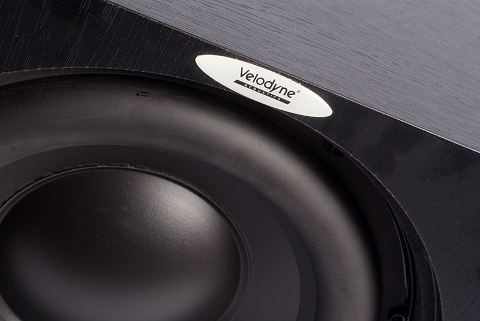
For the listening evaluation of the DB-10, a series of small-volume loudspeakers was employed, which were expected to benefit from their cooperation with the Velodyne. These included the Seren by Ophidian Audio (a review of which can be found here, in greek), as well as the -legendary and, now, almost of vintage value- HPCM Baby by Audio Spectrum (which also feature their own passive subwoofer, thus constituting a form of reference loudspeaker, there is a review here, also in greek). In all cases, connection was made via the high-level input (that is, directly to the outputs of the power amplifier). The remainder of the system was the familiar setup (Melos Plus Series Line/Parasound HCA3500, WiiM Pro/Teac Esoteric D70).
The installation of the DB-10 is a relatively simple matter. It requires some effort in positioning and attention to the basic settings (level, crossover frequency, and phase), but these are issues that any subwoofer user will encounter. With a modest degree of care, however, the Velodyne integrates very well within the room and cooperates with the main loudspeakers without any difficulty. Based on our experience, a very good result can be achieved in less than half an hour. With careful and intensive listening, optimal performance can be reached within one or two days.
The first impression created by integrating the DB-10 into the system was as expected: the system clearly gained extension in the very low-frequency region, became more capable to fill the room, impressive when the recording demanded it, while a sense of fullness was consistently present. All of these characteristics are, of course, inherent in the addition of a ten-inch driver and 350W of installed power to the system. What is more interesting is that this quantitative improvement was accompanied, in the case of the Velodyne, by a qualitative enhancement as well: the system became faster, more dynamic, and gained in liveliness and sense of flow. From a macroscopic and subjective standpoint, the DB-10 improved the performance of some already very good loudspeakers; it did not merely increase bass level.
)
)
Diving into the details, the first advantage gained with the DB-10 is impact and articulation in a region where small loudspeakers simply cannot perform. If one’s music collection includes a significant number of works with a strong electronic character, for example, the result will be particularly satisfying. Not only does one gain information that was previously barely perceptible, but also a greater sense of presence within the listening room.
The lowest end of the spectrum acquires clarity, becomes tangible, and is rendered effortlessly, without compression or restraint—if such expressions may be permitted. The Velodyne sounds generous and relaxed, far from its limits; indeed, when properly adjusted, the correct description is that it does not sound at all, in the sense that it integrates perfectly into the system and its presence cannot be pin-pointed. This is certainly true with regard to tonal balance (one gains extension, but the overall sonic character is determined by the main loudspeaker—an important point), but it also applies to the stereo imaging. With reasonable crossover settings, in the region of 60–70 Hz, the DB-10 does not manifest itself as a distinct source within the room and does not alter the virtues of the main loudspeaker (which, being small in size, typically offers excellent imaging capabilities).
Finally, it is particularly interesting that the integration of the subwoofer also significantly improves the performance of the rhythm section. At first, this may seem somewhat surprising, as the overwhelming majority of the drums spectrum lies above 60 Hz (toms and snare), but there is information below this limit in the reproduction of the kick drum and—especially—the bass strings (electric and acoustic). This information is recovered with the DB-10, thereby significantly enhancing the sense of flow and rhythmic presence. It is self-evident that extreme material involving synthesizers and similar content is also reproduced more convincingly, both in terms of extension and in articulation, as well as in transient impact—and these are among the first aspects one notices.
Conclusion
Given that small-volume loudspeakers possess significant virtues and are, in many cases, an unavoidable choice, the use of a subwoofer within a system is a highly rational option, either as an initial component (if one decides from the outset to create a 2.1 system) or as a future upgrade. If one belongs to either category of user, Velodyne, with the Deep Blue series, offers a simple yet carefully designed solution. The 10-inch model reviewed here proved particularly convincing at all levels, significantly upgrading system performance in the very low-frequency region. To this, one must add the fact that it is easy to position and integrate, and it does not impose an aesthetic burden on the listening space. It is unreservedly recommended.
Previous | Next | More Reviews
The .gr Domain
